
Quick answer: The right glass jar manufacturer depends on your market, annual volume, jar type, filling process, closure, decoration, and delivery region. For high-volume food packaging, global groups such as O-I, Ardagh Glass Packaging, Verallia, BA Glass, Vidrala, and Vetropack are strong starting points. Beta Glass serves West and Central Africa, PGP Glass and Beatson Clark cover specialist segments, and Maidao Glass offers an export-focused China route for stock and custom jars. This guide compares all 10 using current, publicly checkable information.
This 2026 buyer’s guide was last reviewed on August 21, 2026. It is a practical shortlist, not a universal market-share ranking.
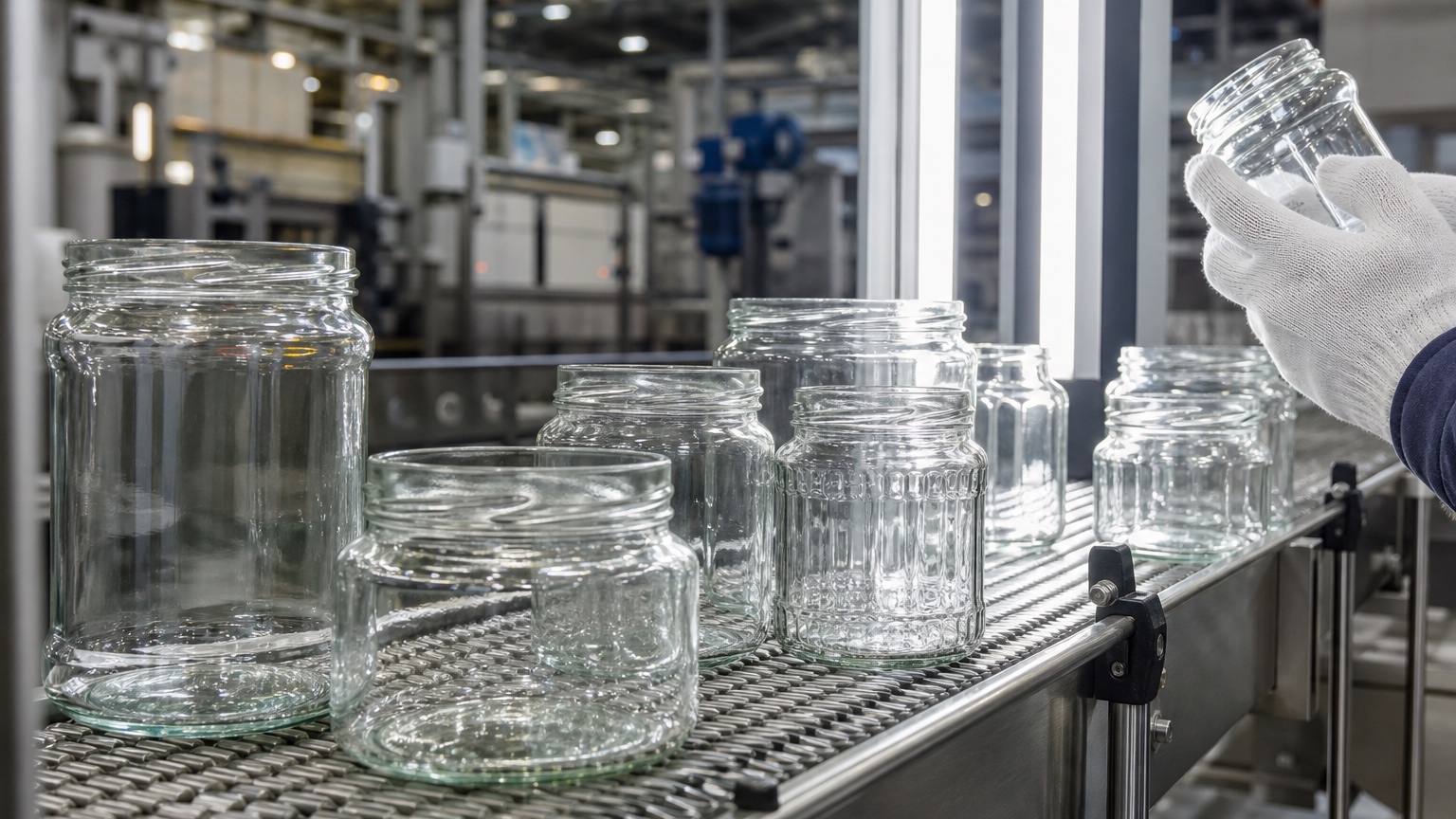
Publisher disclosure: This guide is published by Maidao Glass. Maidao is included as one supplier option and is evaluated using the same buyer questions applied to the other manufacturers. Inclusion does not mean that Maidao—or any company on this list—is the best fit for every project. Commercial payment is not a criterion for inclusion.
How We Selected These Glass Jar Manufacturers
There is no authoritative public table that ranks every glass jar manufacturer across food, beverage, cosmetics, pharmaceuticals, geography, order size, and customization. A company that is suitable for a multinational food program may be unsuitable for a regional brand ordering a custom jar. We therefore treated “top” as a buyer-focused shortlist rather than a claim that number one is universally better than number ten.
Each manufacturer was reviewed against five practical criteria:
- Manufacturing evidence: an official company source identifies glass-container production, production sites, furnaces, or manufacturing capacity.
- Jar relevance: the published portfolio includes jars or wide-mouth containers, not only wine, beer, or spirits bottles.
- Market fit: the company serves identifiable applications such as preserves, sauces, baby food, cosmetics, pharmaceuticals, or specialty food.
- Buyer access: buyers can find a product catalogue, regional sales route, technical information, or a quotation process.
- Geographic usefulness: the shortlist gives buyers options across the Americas, Europe, Africa, and Asia instead of concentrating on one country.
Company scale, product, and sustainability statements are identified as company-reported unless an independent source is linked. Buyers should verify the legal seller, exact production site, certificate scope, product drawing, and current line availability before placing an order.
Top 10 Glass Jar Manufacturers in the World: Comparison Table
On mobile, swipe horizontally to view all columns.
| Manufacturer | Main manufacturing reach | Best fit | Jar focus | What buyers should confirm |
|---|---|---|---|---|
| O-I Glass | Americas and Europe, with a global plant network | Very large, repeat-volume food and beverage programs | Food and beverage glass containers in many shapes, sizes, and colors | Regional product availability, annual volume, line allocation, and development route |
| Ardagh Glass Packaging | North America, Europe, and Africa | Regional brands needing stock or custom food jars at industrial scale | Food jars and bottles, with large regional catalogues and design support | Regional catalogue, plant, MOQ, glass color, closure finish, and lead time |
| Verallia | Europe and Latin America | Food brands prioritizing regional supply and lightweight glass development | Food jars and bottles for sauces, condiments, dairy, and premium applications | Country sales route, available finish, filling conditions, and local production site |
| BA Glass | Europe and North America | High-volume food and beverage customers needing multi-plant supply | Standard and custom bottles and jars for food and beverages | Which plant makes the jar, production-series requirements, and decoration scope |
| Vidrala | Western Europe, the United Kingdom, and Brazil | Preserves, sauces, and established food programs | Preserve jars in multiple capacities, plus broader food and beverage packaging | Catalogue availability by region, closure compatibility, and supply distance |
| Vetropack | Central, Eastern, and Southeastern Europe | European food brands needing standard or custom wide-mouth jars | Preserves, spreads, baby food, dairy, sauces, and specialty foods | Hot-fill or pasteurization requirements, finish, jar weight, and local plant |
| Beta Glass | West and Central Africa | Regional food, beverage, pharmaceutical, and cosmetic programs in Africa | Standard and custom bottles and jars in flint, amber, and green glass | Current legal seller after the 2026 ownership transition, plant, SKU, and export route |
| PGP Glass | India and Sri Lanka, with an international sales network | Cosmetics, perfumery, pharmaceuticals, and specialty food packaging | Standard and custom jars, bottles, decoration, and premium glass programs | Product-specific plant, glass type, decoration tolerance, and regulatory evidence |
| Beatson Clark | United Kingdom, serving domestic and export customers | Food, nutraceutical, and pharmaceutical buyers needing stock flexibility | General-sale and bespoke food and pharmaceutical glass jars | Stock status, amber or flint availability, certification, and decoration MOQ |
| Maidao Glass | China-based production network with international export support | Stock, wholesale, private-label, and custom jar projects with lids and decoration | Food, storage, honey, jam, spice, candle, cosmetic, and related jars | Assigned production base, manufacturing relationship, MOQ, test plan, and delivery terms |
1. O-I Glass, Inc.
Best for: very large, repeat-volume food and beverage packaging programs that can work through a regional industrial supply route.
O-I Glass is a major glass-container manufacturer founded in Ohio in 1903. Its official company profile reports approximately 34 billion glass containers sold in 2025, 19,000 employees, and 61 plants in 18 countries. The company describes its core customers as food and beverage brands and manufactures glass containers in multiple shapes, sizes, and colors.
O-I is most relevant when a buyer has stable forecasts, substantial annual demand, and a filling operation that can qualify an industrial container. Its scale should not be interpreted as universal availability: jar designs, colors, finishes, development services, and order requirements can vary by region and plant. Ask the regional sales team to identify the exact plant, standard catalogue options, annual-volume threshold, tooling route, quality standard, and continuity plan for the proposed SKU.
2. Ardagh Glass Packaging
Best for: established food brands looking for regional manufacturing, a broad stock catalogue, and custom glass design support.
Ardagh Glass Packaging operates across North America, Europe, and Africa. Its European glass packaging page describes an online catalogue of more than 600 standard glass bottles and jars, while its glass design service covers shape, size, color, embossing, filling-line performance, and manufacturability. Ardagh’s African operations publish food, beverage, and pharmaceutical packaging capability, and the North American business offers stock and custom containers for food, beverages, spirits, and wine.
Ardagh is a useful shortlist option when local or regional supply is important. Buyers should choose the regional catalogue first rather than assuming that a jar shown in one market is available in another. Confirm the manufacturing site, glass color, finish standard, minimum run, mold ownership, decoration location, pallet configuration, and whether the proposed jar is compatible with hot fill, retort, pasteurization, or the buyer’s closure-application equipment.
3. Verallia
Best for: food and beverage brands in Europe or Latin America that prioritize regional production, industrial scale, and lightweight glass development.
Verallia manufactures glass packaging for food and beverages across Europe and Latin America. Its 2025 universal registration document identifies jars and bottles for food as a distinct market covering products such as condiments, sauces, dairy products, and spreads; the segment represented 18% of consolidated revenue in 2025. Verallia’s current sustainability program also describes the My Air lightweight food-jar range.
Verallia can be a strong fit for established brands that can source through one of its country organizations. Availability is regional, so the buyer should confirm which country team and plant will quote the project. For a food jar, define the fill temperature, thermal process, vacuum requirement, closure specification, brimful and fill-point capacity, label panel, transport route, and acceptable lightweighting validation before comparing price.
4. BA Glass
Best for: high-volume food and beverage companies that need a large multi-plant supplier and consistent automated inspection.
Portugal-based BA Glass produces bottles and jars for food and beverages. Its current company profile reports 13 glass packaging manufacturing plants, annual production of 12 billion bottles and jars, and sales to more than 70 countries. Its food catalogue includes multiple jar formats, and the company publishes product-development capability covering creative design, technical design, mold design, and production.
BA Glass’s network can support large repeat programs, but the quoted solution still needs to be plant-specific. Ask which facility, furnace, and forming line will make the jar; whether the item is standard or exclusive; what production-series requirements apply; and how the company will control finish dimensions, capacity, thermal shock, coating, cosmetic defects, pallet stability, and any decoration process.
5. Vidrala
Best for: established preserves, sauce, and food brands serving Western Europe, the United Kingdom, or Brazil.
Vidrala manufactures glass bottles and jars for food and beverage markets. Its preserved-food catalogue lists glass jars for jams, sauces, and related products in multiple capacities and dimensions. The company’s 2025 sustainability information reports a network of nine production centers serving markets primarily in Western Europe, the United Kingdom, and Brazil.
Vidrala is a practical option when a catalogue jar matches the product and filling location. Buyers should compare the finish and closure standard, nominal and brimful capacity, jar weight, pallet quantity, local availability, and delivery distance. A catalogue match still requires line trials: cap application, vacuum, pasteurization or hot-fill performance, label application, case packing, and pallet transport should be validated under the buyer’s actual conditions.
6. Vetropack Group
Best for: European food brands sourcing standard or custom jars for preserves, spreads, sauces, baby food, dairy, and specialty foods.
Vetropack publishes an extensive food packaging portfolio of jars and bottles designed for preserves, dairy, sauces, oils, baby food, and specialty foods. Its signature food-container catalogue gives buyers concrete jar capacities, weights, dimensions, and twist-off finishes, making it easier to compare a standard container before requesting a custom design.
Vetropack is especially relevant for buyers whose filling sites are close to its European manufacturing network. Glass packaging is freight-sensitive, so distance, pallet density, and return logistics matter alongside unit price. Confirm whether the selected jar is made at the nearest plant, whether the item is active and available in the forecast volume, and which hot-fill, pasteurization, thermal-shock, vacuum, and closure tests are required.
7. Beta Glass Plc
Best for: food, beverage, pharmaceutical, and cosmetic packaging programs serving West and Central Africa.
Beta Glass manufactures glass containers in Nigeria and exports across West and Central Africa. Its official company profile reports two glass-container plants, three furnaces, more than 650 million bottles and jars produced per year, and flint, amber, and green glass options. The company also publishes a range of standard bottles and jars from 30 ml to 1.5 liters.
Beta Glass was previously the glass business of Frigoglass. Frigoglass announced completion of the sale of Beta Glass in February 2026, so buyers should verify the current legal seller, contracting address, bank account, and responsible production entity during onboarding. Also confirm the assigned plant, glass color, mold and crown or closure interface, export route, quality plan, and availability for the required market.
8. PGP Glass
Best for: cosmetics, perfumery, pharmaceuticals, specialty foods, and premium packaging that requires design and decoration capability.
PGP Glass manufactures glass packaging in India and Sri Lanka and serves an international customer base. Its official company website lists five furnaces, more than 30 production lines, and output above 1,400 tonnes per day. The published product range covers cosmetic and perfumery packaging, specialty food and spirits, and pharmaceutical containers, including standard and custom jars.
PGP Glass is a specialist option when appearance, glass clarity, color, or decoration is central to the project. Buyers should identify the exact manufacturing plant and glass type rather than treating the group as one interchangeable source. Approve physical limit samples for glass distribution, seams, blisters, stones, checks, base appearance, color, embossing, coating, printing, and decoration adhesion. Pharmaceutical and food projects also need product- and site-specific regulatory evidence.
9. Beatson Clark
Best for: UK and export buyers that need general-sale food or pharmaceutical jars, stock availability, or a bespoke design from a specialist manufacturer.
Beatson Clark has manufactured glass bottles and jars in Rotherham, United Kingdom, since 1751. Its official website offers general-sale containers for food, pharmaceuticals, and beverages, many available from stock, plus bespoke design and in-house spray coating. Its current company information reports approximately 605 million units of production and 105,000 tonnes of capacity.
Beatson Clark is particularly useful when a stock jar can reduce development time or when a buyer needs flint or amber pharmaceutical packaging. Stock status can change, and not every item is available in every glass color or quantity. Confirm the current inventory, minimum production or decoration run, finish and cap compatibility, site and certification scope, regulatory file, decoration lead time, and export packing requirements.
10. Maidao Glass
Best for: overseas buyers sourcing stock, wholesale, private-label, or custom glass jars from China with lids, decoration, and export coordination in one project.
Maidao Glass is the publisher of this guide. Its glass jar manufacturing page covers mason, honey, jam, spice, coffee, candy, and storage jars, as well as custom shapes, lids, and decoration. Buyers can also review the factory tour, quality-control process, and individual product categories such as glass honey jars, glass jam jars, and glass storage jars.
Production-network disclosure: Maidao’s website describes a diversified manufacturing model that includes its own factories as well as investments in or contractual relationships with production lines at multiple facilities. Buyers should therefore require the quotation and quality agreement to identify the legal seller, actual production base, manufacturing relationship, furnace and forming route, mold ownership, inspection responsibility, and party responsible for nonconforming goods.
This model can be useful when a buyer needs to match a project to different Chinese production routes instead of forcing every jar onto one line. The correct route depends on jar design, weight, glass color, annual volume, closure, decoration, and destination. Do not rely on a general website MOQ or lead-time statement; request a project-specific quotation and sample plan.
Which Glass Jar Manufacturer Fits Your Project?
- Very large global food or beverage program: start with O-I and compare regional options from Ardagh, Verallia, BA Glass, Vidrala, and Vetropack.
- European preserves, sauces, or baby food: compare Ardagh, Verallia, Vidrala, Vetropack, BA Glass, and Beatson Clark based on the nearest qualified plant.
- West or Central African supply: evaluate Beta Glass and Ardagh Glass Packaging–Africa against the exact country, plant, and logistics route.
- Cosmetic or premium specialty jar: compare PGP Glass with specialist programs from Beatson Clark and Maidao; approve physical limit samples for appearance and decoration.
- Pharmaceutical or nutraceutical jar: compare Beatson Clark, PGP Glass, and suitable regional specialists using the exact pharmacopeia, drug-market, and site requirements.
- China stock or custom jar with lids and decoration: evaluate Maidao against a signed drawing, closure specification, sample, inspection plan, and disclosed production base.
- Small or early-stage brand: first look for an active stock jar. Large furnace operators may not be economical for a new custom mold or a short run.
Glass Jar Factory Verification Checklist
Before approving any glass jar manufacturer, request evidence for the exact legal entity and production site that will handle the order:
- Business registration, legal company name, factory address, and contracting entity.
- Current factory evidence showing the batch house, furnace, forming line, annealing lehr, cold-end inspection, packing, and warehouse.
- The proposed furnace, forming machine, glass color, jar weight, production method, and line allocation.
- A controlled technical drawing showing finish, nominal and brimful capacity, weight, height, diameter, label panel, and critical tolerances.
- A closure drawing and confirmation that the jar finish, cap, liner, vacuum, torque, and sealing process work as one system.
- Certificates naming the legal entity, site, scope, standard, certificate number, issuer, and validity period.
- A product-specific test plan covering the actual filling, hot-fill, pasteurization, retort, pressure, thermal-shock, or chemical-compatibility conditions.
- Approved samples and physical quality-limit samples for visual and dimensional defects.
- Mold ownership, maintenance, storage, replacement, confidentiality, and transfer terms.
- Pallet, carton, divider, fumigation, container loading, breakage allowance, claims, and corrective-action terms.
What to Include in a Glass Jar RFQ
A useful quotation depends on a useful brief. Send the same RFQ to every shortlisted supplier so that price and lead-time comparisons are meaningful:
- Product inside the jar and the target market.
- Required capacity, dimensions, jar weight, glass color, and reference image or drawing.
- Stock jar or custom mold; expected annual volume and quantity per order.
- Closure type, finish standard, liner, vacuum, torque, and tamper-evidence requirement.
- Filling temperature and process: cold fill, hot fill, pasteurization, retort, freezing, or another condition.
- Decoration: embossing, debossing, coating, screen printing, decal, label, sleeve, or plain glass.
- Food-contact, pharmaceutical, customer-specific, or destination-market testing requirements.
- Sample quantity, sample purpose, testing plan, and approval deadline.
- Packing method, pallet restriction, destination port, Incoterm, and requested delivery date.
- Whether the supplier must quote the jar only or a complete jar, lid, decoration, packing, and freight solution.
For a Maidao project, send these details through the contact page or request a sample. A project-specific quotation is more reliable than a generic online promise.
Frequently Asked Questions
Who is the world’s largest glass jar manufacturer?
There is no single public ranking that isolates glass jars across every region and application. O-I is one of the world’s largest glass-container producers and reports approximately 34 billion containers sold in 2025, but that figure includes bottles and other glass containers, not jars alone. The best supplier decision should be based on product fit, plant location, annual volume, quality requirements, and service—not size alone.
What is the difference between a glass jar manufacturer and a supplier?
A manufacturer operates the furnace and forming equipment that makes the jar. A supplier may be a manufacturer, distributor, packaging integrator, exporter, or sourcing company. A non-manufacturing supplier can still add value through stock, mixed products, lids, decoration, quality control, and logistics, but the actual factory and each party’s responsibility should be disclosed.
What is the MOQ for custom glass jars?
There is no universal MOQ. It depends on the furnace, forming machine, jar weight, color, mold configuration, production campaign, decoration process, and whether an active stock design is used. A stock jar may be available in much smaller quantities than a new custom mold. Ask for separate MOQs for undecorated jars, closures, each decoration process, and each SKU.
Should I choose a local or overseas glass jar manufacturer?
Local manufacturing can reduce freight distance, lead-time risk, and inventory requirements. Overseas sourcing may offer a broader design range, different tooling economics, or one-stop access to jars, lids, and decoration. Compare total landed cost, not only unit price: include molds, samples, inspection, decoration, breakage, duties, freight, inventory, financing, and the cost of a delayed production run.
Which tests should a food glass jar pass?
The test plan depends on the product and filling process. Common controls include finish and dimensional checks, capacity, weight, vertical load, impact, thermal shock, internal stress, coating, vacuum or seal performance, closure torque, and visual defects. Hot-fill, pasteurization, retort, pressure, or migration requirements must be defined for the actual product and destination market. A general ISO certificate is not a substitute for product-specific validation.
How do I verify that a glass jar supplier is a real factory?
Check the legal registration, business scope, factory address, production equipment, employee roles, site-specific certificates, and shipping documents. Request a live walkthrough from raw-material batching through furnace, forming, annealing, cold-end inspection, packing, and warehouse. If the seller uses a partner plant, ask for the manufacturing agreement or written disclosure and define responsibility for quality, delivery, and claims.
Are the companies in this guide ranked from best to worst?
No. The numbered format makes the guide easier to navigate, but the list is not a universal league table. The companies serve different regions, order sizes, and applications. Buyers should use the comparison table to create a project-specific shortlist and then validate the actual plant and SKU.
Sources and Editorial Policy
This update uses official manufacturer websites, current company reports, and product catalogues as primary references. The practical sourcing questions reflect glass-packaging project requirements; they are not endorsements or independent factory audits. Public claims can change, so buyers should verify all material facts during supplier qualification.
- O-I: official company profile
- Ardagh Glass Packaging: European markets and catalogue
- Ardagh Glass Packaging: design services
- Verallia: 2025 universal registration document
- BA Glass: official company profile
- Vidrala: preserve-jar catalogue
- Vetropack: food packaging portfolio
- Beta Glass: official company profile
- PGP Glass: official company and product profile
- Beatson Clark: official company information
- Maidao Glass: glass jar manufacturing page
- Maidao Glass: quality-control process
Corrections policy: If a listed manufacturer provides verifiable evidence that a material fact is inaccurate or outdated, Maidao will review the evidence and correct the article. The visible review date and structured-data modification date should only change after a substantive review.
 English
  Español de México
  한국어
한국어